VIA Studio
CMO Leadership: You Can't Cut Your Own Hair - Working With an Agency
Part 4 of the Marketing Leadership series.
Part 1: Supercharge Your Value in the C-Suite
Part 2: How Does this Business Actually Make Money?
Part 3: CMO Prioritization Systems
Part 4: You Can't Cut Your Own Hair: Working With an Agency
Part 5: (coming soon) The Operating Cadence of a Focused Marketing Team
Part 6: (coming soon) How To Decide What To Do Next
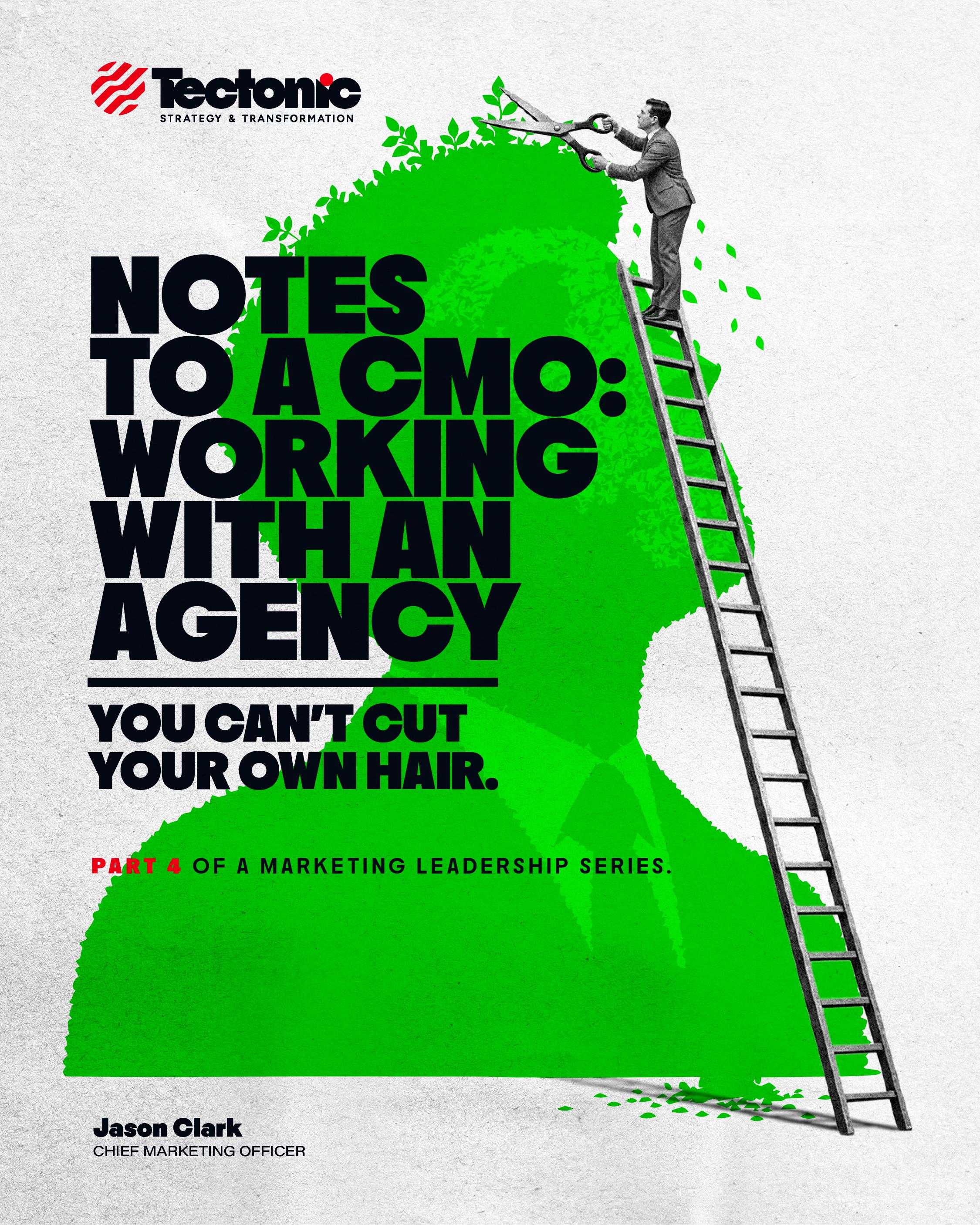
Through three articles now, you've built the revenue context and a prioritization system that can survive a busy company. Everything so far has assumed the answers live inside your building.
This article is about the ones that don't.
I spent over 20 years on the agency side before taking the CMO chair, so believe me when I say I've seen both versions of this relationship: the agency as an overpriced pair of hands, and the agency as the outside eyes that changed what a company could see about itself. The difference is rarely the agency. The difference is how the companies work together.

You can't read the label from inside the jar
Here's the structural problem with being inside an organization: proximity blinds.
- You've heard the company story so many times you can no longer hear it the way a buyer does.
- The website copy sounds right because you wrote it.
- The org's habits feel like laws of physics because nobody remembers deciding them.
- Your positioning made perfect sense in the meeting where it was born, and you were in that meeting.
None of this is a failure of intelligence. It's a property of being inside. You can't cut your own hair. You can try, and the mirror will even make you feel like it's going fine, but everyone else can see the back of your head.

An outside partner brings the one asset you structurally cannot generate: distance and perspective. They hear your pitch new, the way a prospect does. They've watched dozens of organizations attempt the thing you're attempting, and they know where the bodies are buried. They can say the obvious-but-unsayable thing in a meeting because they don't report to anyone in the room. Their goal is your success, because that’s what keeps them in the room.
That third one matters more than people admit. Sometimes an organization already knows its answer and needs an outside voice to make it hearable. I wrote about that stalemate in the context of strategy fights: an outside consultant who can build the strategic case and present it without internal politics attached is sometimes how the argument finally gets settled. The future perfect state is owning your strategy in-house, but getting there can take years and sometimes a change in leadership seats. Firms like ours exist in part for that gap, supporting a CMO in the very real fight for a strategy the building either can’t develop because of conflicting responsibilities or can't yet agree on.
The thing you never hand over
Now the caveat, and it's the spine of this whole series:
The CMO always keeps line of sight into the revenue levers.
An agency can rewrite your positioning, redesign your site, run your channels, and tell you truths your org chart won't. What they cannot do is know, better than you, how this specific business makes money: which services carry margin, which clients concentrate risk, where the growth target actually comes from. That's the one-page picture from Part 2, and it stays in your hands (because that’s the job).
A simple test sorts work between strategy and tactics: does this task need judgment about our business or skill at a craft? Keep judgment close. Craft can (and largely should) travel. If you find yourself asking an agency which of your revenue levers matters most, stop.
Outside perspective and inside ownership aren't in tension. They're the pairing that works: the agency sees what you can't, and you decide what it means for the money.
How to be a client worth having
Twenty years of sitting on the other side of the table taught me exactly which clients got our best work. Here's how to be one of them.
Bring your context, in writing. The one-page revenue picture, your priorities, the strategic plan, what’s been tried. Every hour an agency spends guessing at your context is an hour you paid for twice: once in fees, once in rework. Great clients make the jar transparent from day one.
Ask for the uncomfortable read first. Before any deliverable, ask the agency what they see: about your positioning, your site, your story, told cold. That outside read is the most valuable thing in the engagement and the thing proximity makes you incapable of producing. If you only buy hands, you'll only get hands.
Define the expectations, then get out of the way. Decide what needs your review (for us: public-facing brand and positioning, sales enablement, net-new messaging) and what explicitly doesn't. Review everything and you're paying agency rates to create a bottleneck.
Match the meeting rhythm to the volume. Around 30 or more hours a month, run weekly check-ins plus a comprehensive monthly or quarterly meeting. Below that, a slower rhythm is fine. At high volume an agency is a team member, and no team member should run too long on outdated context.
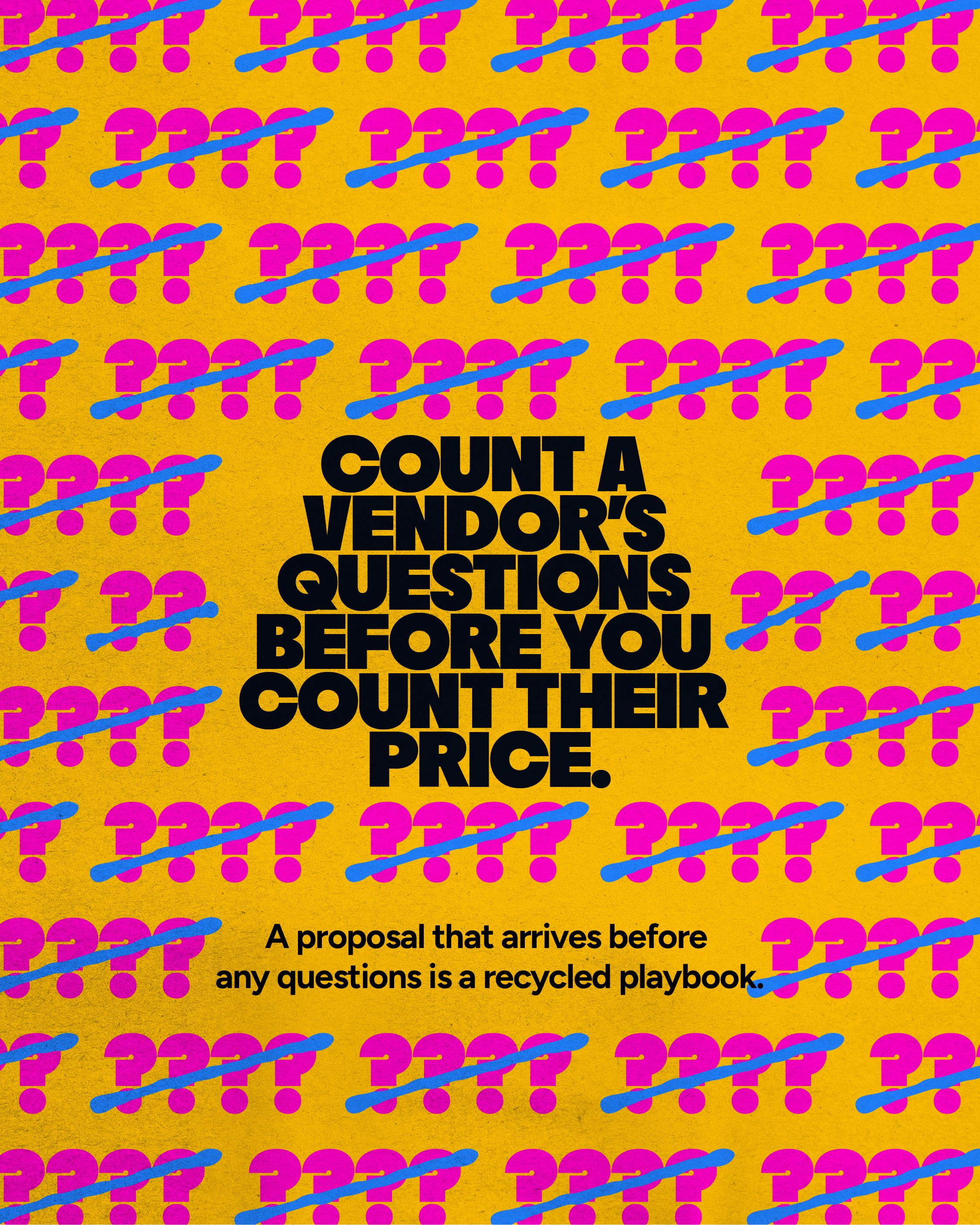
Count their questions before you count their price. This one is for choosing the agency in the first place. A partner worth hiring interrogates your business before proposing anything: how you make money, who your buyers are, what you'd stop doing to fund the work. A good one asks first. A proposal that arrives before questions is a recycled playbook with your logo on it. The only counterpoint to that is that you know explicitly what you need and can provide it in a brief.
When the outside voice earns its fee
Watch for the moments an agency relationship pays for itself, because they're rarely the deliverables:
- The meeting where they say the thing your team has whispered for a year
- The cold read of your homepage that a decade of familiarity made impossible
- The pattern from another industry that reframes your problem (and possibly the solution)
- The strategy presentation that ends a two-year internal stalemate
None of those show up on a Statement of Work, and all of them are why you can't cut your own hair. Buy the craft when you need capacity. But choose a partner for the perspective, because perspective is the thing your internal team is missing.
Do this next
- Write your one-page revenue picture before the first agency meeting. Bring it. Watch what a good partner does with it.
- Sort your current agency scope with the judgment-or-craft test. Anything requiring judgment about your business comes home.
- Ask your agency for one uncomfortable read this quarter, with no deliverable attached. Do not grade them low if you disagree or get your feelings hurt.
- Set the meeting rhythm by volume: 30+ hours a month gets weekly check-ins and a lower frequency deep-dive.
- If your organization is deadlocked on strategy, consider whether an outside voice presenting the case is what finally settles it. Just remember who owns the revenue levers when the engagement ends.
Next in the series: the operating cadence, the meeting rhythm that keeps your context, your priorities, and yes, your agency, pointed at strategy instead of drifting.
Jason Clark is Chief Marketing Officer at Tectonic, a digital services company, and spent 20+ years on the agency side before switching chairs.
FAQ
How should a CMO work with a marketing agency?
Bring your revenue context in writing, ask for the uncomfortable outside read before any deliverable, define review gates so routine work flows without you, match meeting frequency to volume, and keep line of sight into the revenue levers yourself. Agencies supply craft and perspective; the CMO owns what it means for the money.
When should you hire a marketing agency?
Three reliable moments:
- when you need craft skills you can't justify full-time,
- when you need capacity beyond your team,
- and when you need an outside perspective that proximity makes impossible, including presenting a strategy you can't settle internally.
What should you never outsource to an agency?
Understanding of how your business makes money. An agency can execute, advise, and challenge, but the CMO keeps line of sight into the revenue levers: which services carry margin, which clients concentrate risk, and where growth comes from.
How do you choose a good marketing agency?
Consider their questions, unless you know exactly what you need. A proposal that arrives before questions is a recycled playbook. Look at their case studies and see if you can find yourself in any of them. An RFP process can be disastrous for both parties, so avoid that if at all possible. RFP’s were intended for commodities where the product or service you’re buying is almost identical.