VIA Studio
AI hasn’t killed design. It’s made me appreciate it more.
It was exhausting at first. AI was everywhere. You couldn't open social media without being fed another tool promising to revolutionize creativity or kill design as we know it. The fear-based marketing was annoying, sure, but I also knew I couldn't just ignore what was happening around me. I needed to form my own opinions. So I logged off LinkedIn and rolled my sleeves up.
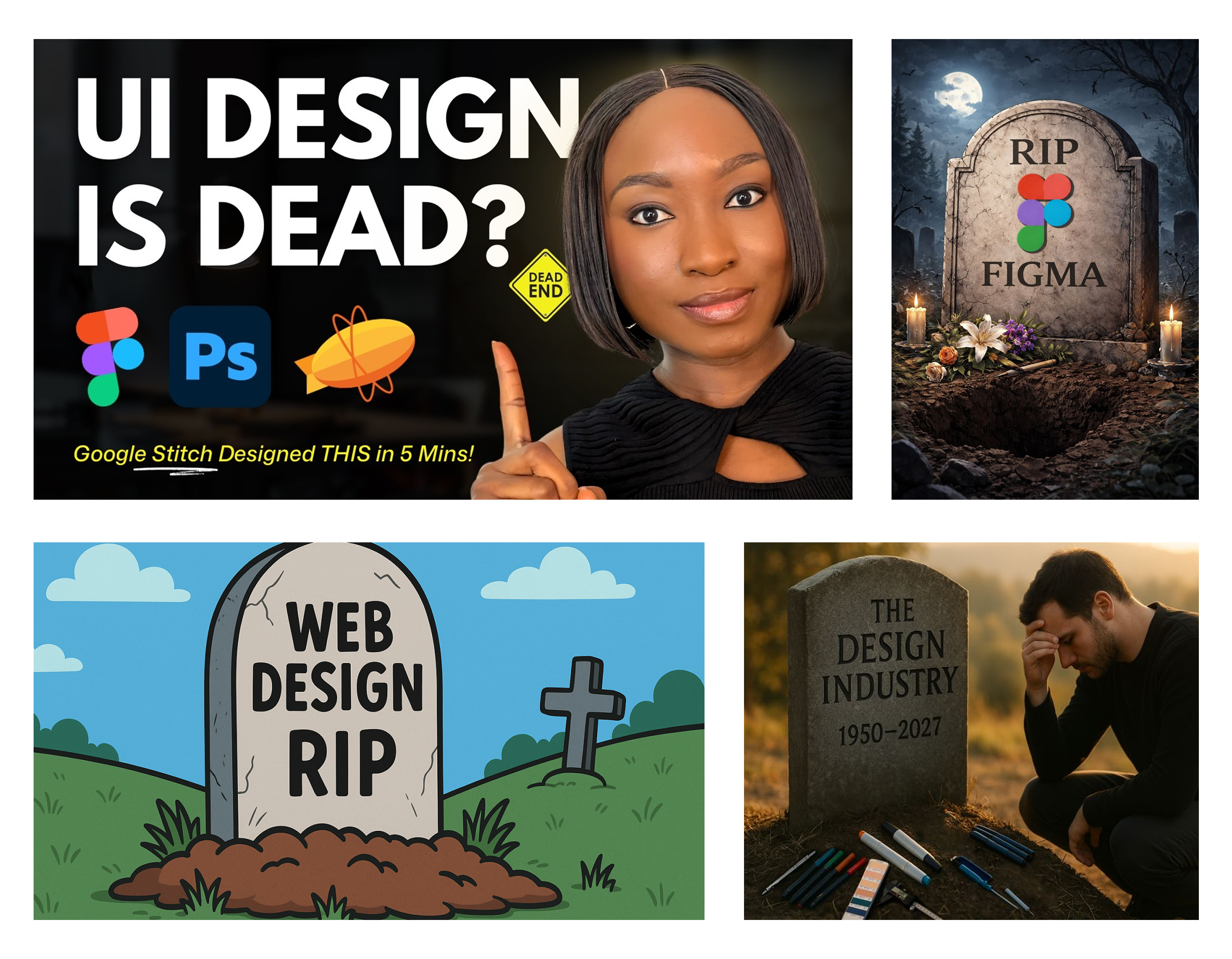
My journey and experience with AI as a tool in my toolbox started the same way I’m sure it did for many designers: Led by curiosity and excitement. Then frustration. Then a lot of experimentation (and even more trial and error), to eventually lead to a few practical integrations, a better understanding of where AI fits into my workflow, and finally... confidence around not being replaceable.
What I Learned
I love the creative process. I loved it when I first started my career and I love it now. It’s the messy parts of figuring out what's working and what isn't. Putting yourself in another’s shoes and empathizing with a user in order to understand their motivations. Playing into emotions and crafting an experience that meets the needs of an audience. It’s not a straight path and it’s not the same answer for every project. Almost nothing about the design process is formulaic, and that’s what makes it so beautiful!
I still open a sketchbook at the start of almost every project. There's something special about putting pencil to paper and drawing a line that has never existed before. It's entirely yours! That's when I started realizing where AI was struggling. Every project is different, every stakeholder has unique perspectives, and every audience has different needs, frustrations, motivations, and expectations. Great design solutions require context, nuance, emotion, and empathy. Once I stopped trying to force AI into every part of my workflow simply because it was available, I started finding where it actually provided value.
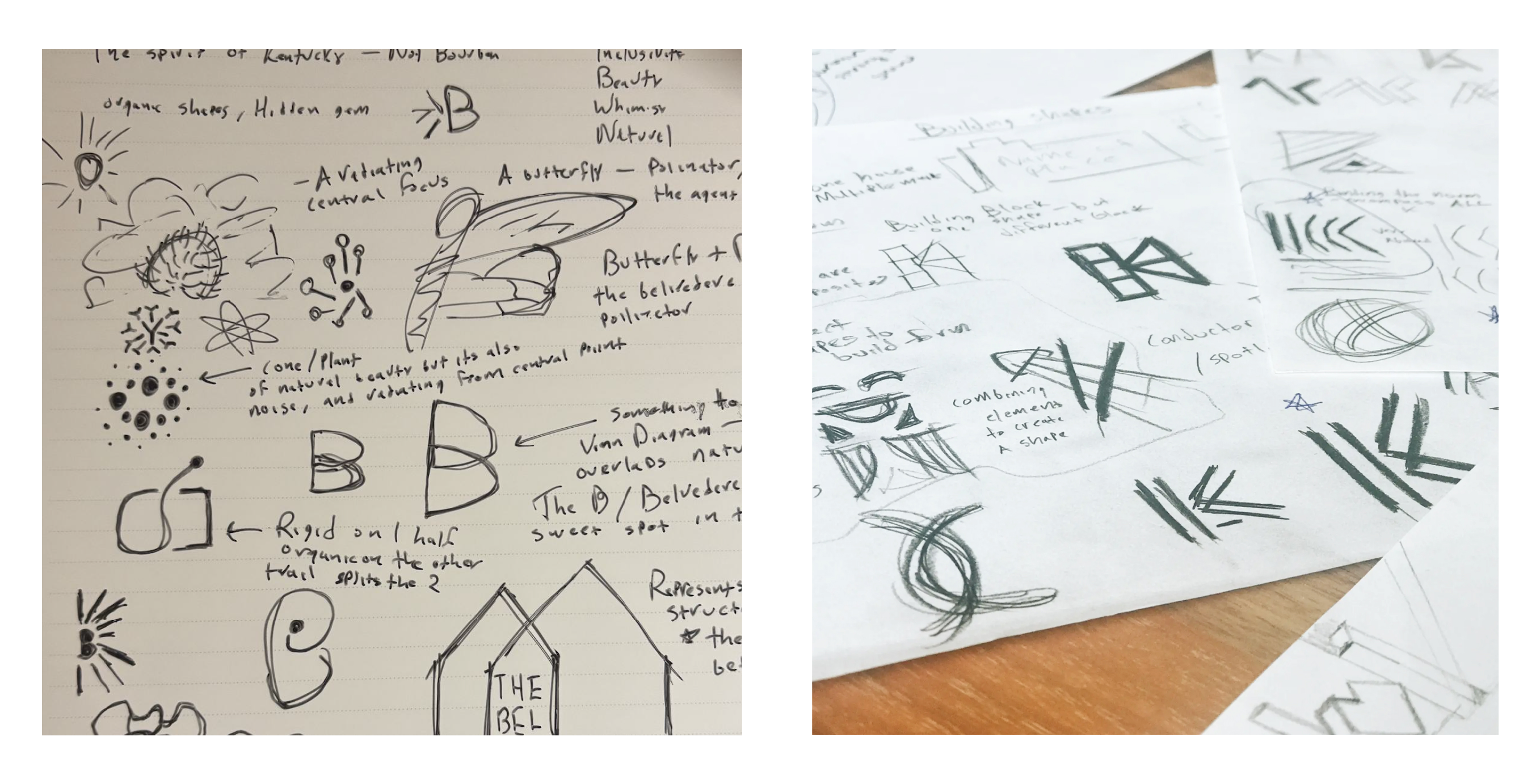
Cooking and baking are great metaphors here. I love cooking because I love to try new things. You can experiment, get creative, try new ingredients, and customize the recipe based on who it’s for. It’s a lot like design.
On the other hand, baking is more formulaic. You have to be exact. You have to measure and make sure everything is just right before it goes in the oven. I see interacting with AI as more of the baking. You have to be purposeful and exact about what you are putting in. If AI were to help you cook, you might ask it to add a little bit of pepper, and it decides it wants to put in turmeric, and all of a sudden, you’re trying to scoop ingredients out of the pot.
BUT can you let it watch you cook and learn to become your sous chef? Absolutely. Let me explain …
The Best Use Case? Removing the Tedium.
Designers can wear a lot of hats. Collaborating with strategy-led initiatives, interviews, UX audits, information architecture, copywriting, establishing a brand voice, visual concepts, crafting brand systems, presentations and pitches, documentation, etc. So, if a helping hand is available, would you take it? “YES CHEF!”
AI isn't replacing you or me as a designer, and if you’re using it correctly, it can actually allow you to be a better one by reducing the tedium so you can spend more time on the parts of the process that remain deeply human: judgment, storytelling, empathy, and craft.
How I Use AI Today
Will I need to revise this weekly? Probs. But here is where I am finding the most value today:
Reducing Repetitive Work
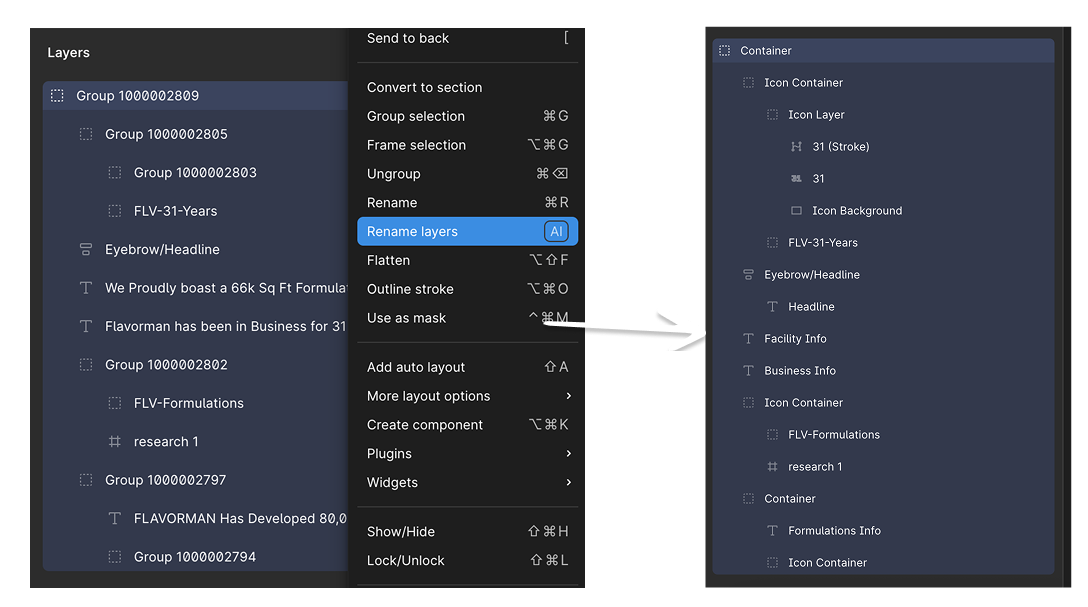
This is where Figma AI has become genuinely useful. Features like Rename My Layers are simple, but they save real time. All of a sudden, with a click or 2 ….
Group 001192 becomes:
- UI / Card
- Card Title
- Primary Button
Magic.
Connecting Claude and Figma through MCP has opened up even more practical use cases:
- Running spacing audits
- Checks to ensure variables are being applied consistently
- Auditing component usage and replacing detached instances
- Identifying random groups that should be systematized
- Preparing and batch-exporting assets for developer handoff
- Reviewing designs for accessibility issues and contrast compliance
- Adding annotations directly into the designs for suggested accessibility improvements
None of these tasks requires deep, creative thinking, but they do require a designer’s time and attention. Every minute spent organizing layers, manually providing spacing values, and cleaning up your design files is a minute not spent solving actual design problems. This is where using AI as a sidekick to automate the housekeeping can be super powerful. I’m not letting AI cook, I’m asking it where to find the highest quality, lowest cost ingredients.
Accelerating Research and Synthesis
Claude and ChatGPT have become incredibly helpful here. My notes can be messy and jumbled, my thoughts are usually linear, but every now and then, they take the scenic route. A quick clean-up and organization at the hands of a robot isn’t the worst thing in the world!
AI helps me here to …
- Summarize research
- Identify recurring themes in docs and files
- Generate questions
- Draft presentation structure
- Organize findings into something coherent
People often forget that part of a designer's job is selling the work. You can create the most beautiful solutions, but at the end of the day, you need confidence, rationale, communication skills, and preparation to sell it. Now, this doesn't mean letting Claude sell your work for you, but invite it to the table to talk through your findings. Presentations of course, require human judgment. Research still requires validation. Strategy still requires context.
AI can be there to listen, help frame, organize, and accelerate the time-consuming bits. It's not driving the car, but it might let you know there's a road closure ahead.
Where AI Still Falls Short
So, I don’t want this to turn into another hype piece. I want to be a realist about where things are now. That doesn’t mean they won’t head in a more positive direction tomorrow, but these are the things I have personally identified as shortcomings, through trial and error.
AI is great at identifying patterns but you HAVE to have a strong foundation and good inputs, for it to be helpful. That means in order for it to work hard for you, you have to work hard at what you’re giving it, so it still takes time and effort up front.
Empathy is at the top of that list of things AI just can’t grasp. Sir Claude can't sit across from a stakeholder who's nervous about change, and it can't recognize hesitation in someone's voice. Designers still need to navigate competing personalities, priorities, politics, and emotions in order to understand the emotional weight attached to a decision. Chat GPT can't attempt to replace the trust that's built through real, face-to-face conversations.
Confidence Doesn't Equal Accuracy
One of the most important lessons I've learned is that AI's confidence can be misleading. I've had it provide answers that sounded completely authoritative, detailed, uber-specific, eloquent … And entirely wrong. That's dangerous! Not the fact that AI makes mistakes, because obviously, we make mistakes too! The danger is that AI often delivers those mistakes with absolute confidence. That's why validation matters. Critical thinking matters.
AI should help challenge assumptions, not become one.
My Rule of Thumb
My current rule of thumb is simple: Let AI help.
Let it organize information, generate quick ideas, speed up documentation, and reduce repetitive work.
When it's time to make decisions, prioritize users, understand their stories, and shape experiences, that's still human work. AI can help us move faster, but it can’t replace human-centered aspects of design that require empathy. It can hypothesize user needs, but those are still assumptions that need to be validated and challenged.
The future of design isn't designers versus AI; in my opinion, it will be designers who know how to work with AI thoughtfully and responsibly. The more AI handles repetition, the more valuable uniquely human skills become!
- Empathy
- Taste
- Storytelling
- Judgment
- Intuition
- Original thought
- Creativity
Those messy moments that eventually lead to something beautiful are what I love most about design, and thankfully, those aren't going away. In fact, they're becoming the differentiators. And that's exactly why I'm even more optimistic about design today than I was before the tombstone graphic hit my feed.